.jpg)




Front entrance to Hermitage Hotel on Sixth Ave. North, 2018. Image courtesy of MHCF.
Stop 6 of 11
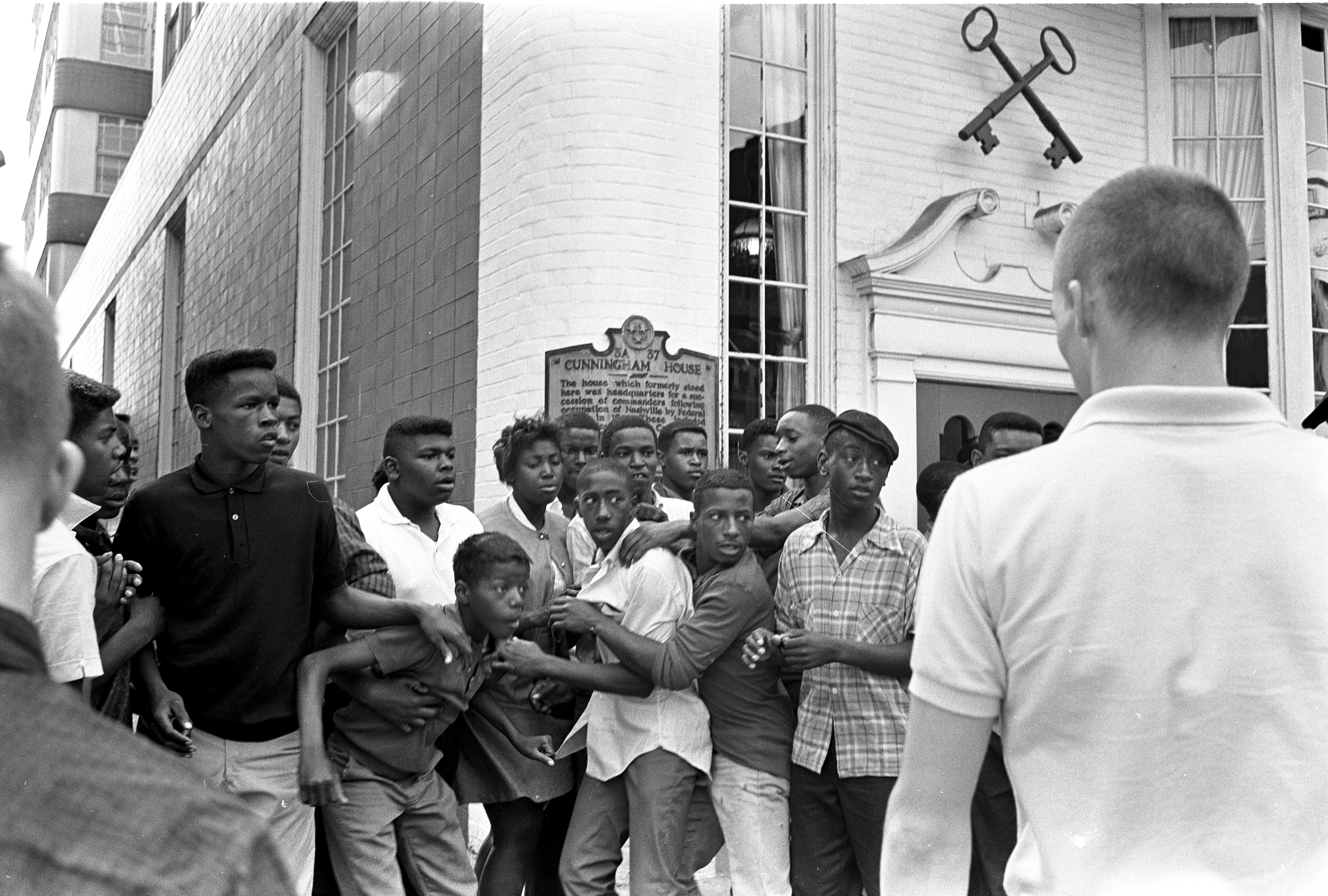
Hermitage Hotel and Cross Keys Restaurant
While the Hermitage Hotel is noted as ground zero for the woman’s suffrage movement, it also was also embroiled in Nashville’s movement for equal rights in the 1960s. In the 1920s, white women could not use the main entrance and had to use a side door. Forty years later, African Americans were not allowed to enter either door unless they were on the hotel’s staff. From lunch counter sit-ins to stand-ins at movie theaters, Civil Rights activists slowly but surely dismantled discriminatory policies in Nashville. In January 1962, protesters turned their attention to other types of businesses. This included downtown hotels that depended on Black labor as waiters, doormen, and housekeepers but refused to allow African American guests.
The Nashville Christian Leadership Council (NCLC), led by the Reverend Kelly Miller Smith and James Lawson, negotiated with hotel management to desegregate downtown hotels including the Hermitage Hotel. They failed to reach an agreement, and in February 1962, student protesters staged sit-ins in several hotel lobbies. Not only were the hotels’ policy of not allowing African American patronage problematic, but the employment of African Americans also became an objective. For the next year, Nashville encountered almost daily demonstrations against racial segregation, unfair employment practices, and institutional policies.
On May 13, 1963, anti-segregation demonstrators clashed with police and white citizens as they picketed on the sidewalks outside white-only restaurants and hotels. On May 18, 1963, President John F. Kennedy visited Nashville to celebrate Vanderbilt’s 90th anniversary, which resulted in massive crowds downtown. Racial tensions rose in the streets as Black protestors marched outside of the Hermitage Hotel and nearby Cross Keys restaurant. No arrests or extreme violence occurred, but members of the Student Nonviolent Coordinating Committee, or SNCC, were pushed and shoved by white policemen who stood in front of the entrances. White patrons were allowed inside. Video footage of the day’s events received national news coverage because of Kennedy’s visit. It was not a good look for Nashville, nor for the Hermitage Hotel.
After almost a year of protests, in the summer of 1963, the Hermitage Hotel integrated and allowed Black guests. In 1964, the Civil Rights Act made it illegal for any business to refuse services based on race. The Hermitage Hotel is on several other Nashville Sites Tours and was also a part of the fight for voting rights for women. See the list at the bottom of the page and check out the other tours that feature this historic hotel.
Walk up Union Street past the Hermitage Hotel to Seventh Ave. North. Cross the street and turn LEFT. Walk down about half a block to reach your next stop, the YWCA, on your right.
Tour Stops
Harvey's and Cain-Sloan Department Stores
500 Church Street, Nashville, TN 37219
Woolworth, McLellans, and Kress
221 5th Ave N, Nashville, TN 37208
The Arcade and Walgreens
65 Arcade Alley, Nashville, TN 37219
Davidson County Courthouse and Witness Walls
1 Public Square, Nashville, TN 37201
War Memorial Plaza and Auditorium
301 Sixth Avenue North, Nashville, TN 37243
Hermitage Hotel and Cross Keys Restaurant
231 Sixth Avenue North, Nashville, TN 37219
Young Women's Christian Association (YWCA)
211 Seventh Avenue North, Nashville, TN 37219
Doctor's Building
710 Church Street, Nashville, TN 37203
Civil Rights Room and Greyhound/Trailways Bus Stations
615 Church Street, Nashville, TN 37219
John Lewis historical marker and the Freedom Riders
611 Commerce Street, Nashville, TN 37219
First Baptist Church, Capitol Hill
800 Dr. Martin Luther King Jr. Boulevard, Nashville, TN 37203